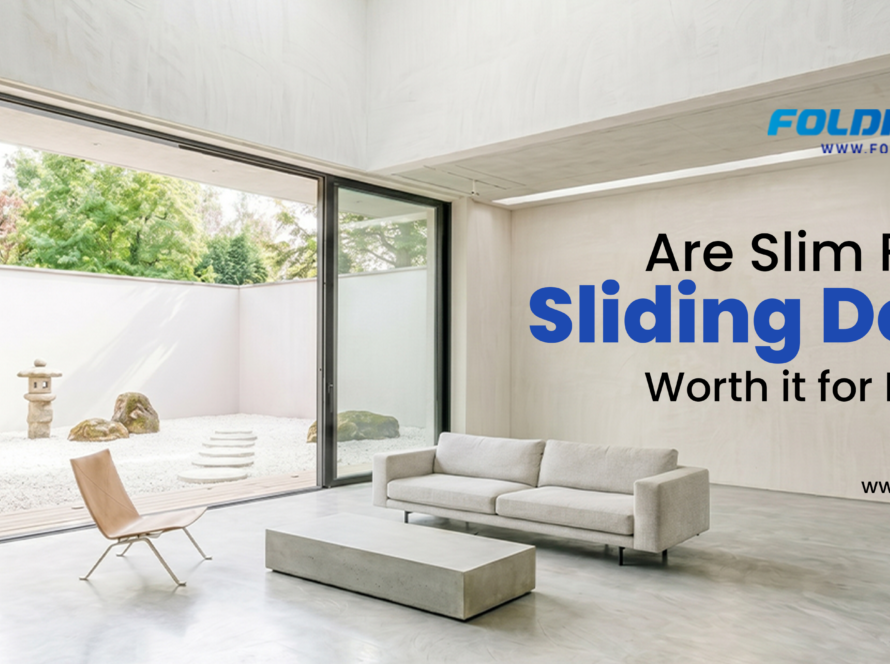
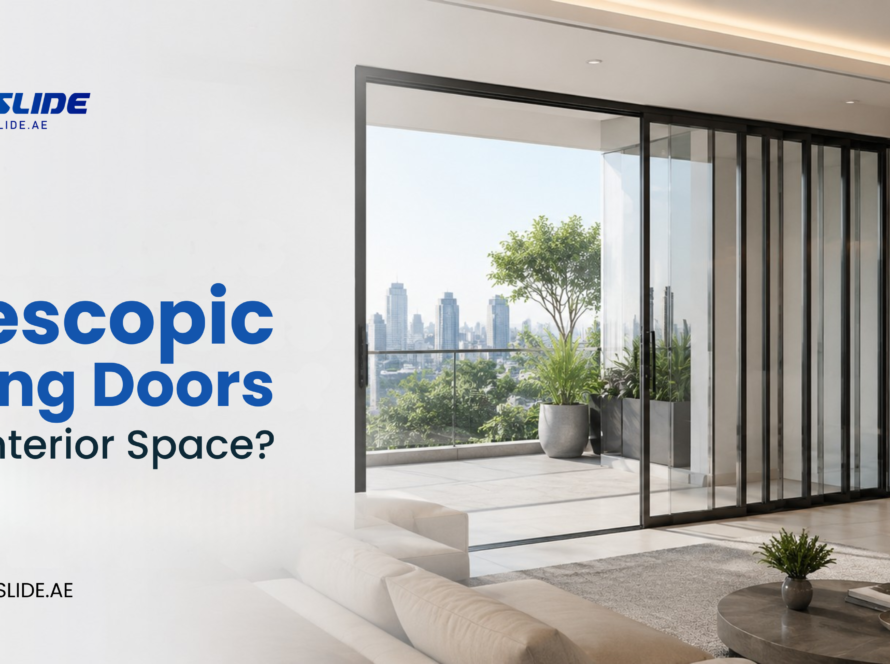
Choosing the right sliding doors can make a big difference to how your home looks, feels, and connects with the outdoors. Slim sliding doors and panoramic sliding doors are both popular choices for modern homes because they offer large glass areas, plenty of natural light, and a clean appearance. However, the two terms are not always used in exactly the same way. Slim sliding doors mainly focus on reducing the visible frame, while panoramic sliding doors focus on creating a wide, open view with large areas of glass. In some cases, a door can be both slim and panoramic. Understanding the difference can help you choose a system that matches your space, design, budget, and everyday needs.
What Are Slim Sliding Doors?
Slim sliding doors are glass doors designed with narrow visible frames, also known as slim sightlines. The idea is simple: use less visible aluminium and more glass.
The narrow frame allows more of the outside view to remain visible when the doors are closed. It can also help more natural light enter the room. Aluminium is commonly used because it can provide the strength needed for large glass panels while allowing manufacturers to create relatively narrow profiles.
Slim sliding doors are often chosen for:
- Modern homes
- Kitchen extensions
- Living rooms
- Garden rooms
- Balconies
- Large patio openings
- Contemporary office spaces
The exact frame width depends on the door system. Some premium systems have meeting sightlines around 20–30 mm, while other slim systems use wider profiles. This is why it is important to check the actual sightline rather than relying only on the word “slim.”
What Are Panoramic Sliding Doors?
Panoramic sliding doors are designed to make the outside view a major part of the room. They usually combine large glass panels, wide openings, slim sightlines, and sometimes concealed frames or flush floor tracks.
The goal is to create a feeling that the wall has opened up. When the doors are closed, you can still see a large part of the garden, terrace, balcony, or landscape.
Some panoramic systems are designed with floor-to-ceiling glass and concealed frames, helping create a very minimal appearance.
Panoramic doors are especially common in:
- Large modern houses
- Luxury homes
- Homes with attractive outdoor views
- New-build properties
- Architectural extensions
- Properties with large openings
You Can Also Read: Slimline vs Standard Sliding Doors: Which Is Right for Your Dubai Property?
Slim Sliding Doors vs Panoramic Sliding Doors: The Main Difference
The biggest difference is what the design is trying to achieve.
A slim sliding door mainly focuses on reducing the visible frame.
A panoramic sliding door mainly focuses on maximizing the overall view and creating a large glass opening.
That does not mean they are completely separate products. A panoramic door can have a slim frame, and a slim sliding door can provide a panoramic view.
Think of it this way:
| Feature | Slim Sliding Doors | Panoramic Sliding Doors |
|---|---|---|
| Main focus | Narrow visible frames | Wide, open views |
| Glass area | Large | Usually very large |
| Sightlines | Slim | Slim to ultra-slim |
| Opening size | Small to large | Usually large |
| Appearance | Clean and modern | Minimal and architectural |
| Natural light | High | Very high |
| Outdoor connection | Strong | Very strong |
| Best for | Modern everyday spaces | Large architectural openings |
| Cost | Depends on system | Often higher for premium systems |
1. Frame Size and Sightlines
Sightline is one of the most important terms to understand when comparing sliding doors.
It refers to the visible section of the frame, especially where two sliding panels meet. A smaller sightline means you see less aluminium and more glass.
For example, some slim systems offer sightlines around 20 mm, while other systems may have wider profiles. There is no single frame size that defines every slim sliding door.
Panoramic systems also tend to use narrow sightlines because the purpose is to keep the view as open as possible.
Tip: When comparing products, ask for the actual sightline measurement rather than simply asking whether the door is “slim.”
2. Size of the Glass Panels
Slim doors can have large glass panels, but panoramic systems are generally designed around very large openings.
A panoramic system may use fewer, larger panels to reduce the number of visible vertical frames across the opening. Some systems are specifically designed for floor-to-ceiling glazing and large architectural openings.
However, bigger glass panels also mean greater weight. The rollers, tracks, frame, glass specification, and installation all need to be suitable for the size of the door.
This means the largest-looking door is not automatically the right choice for every home.
3. Natural Light
Both types can bring more daylight into a room than doors with larger frames.
Slim frames leave more glass visible, allowing sunlight to enter through a larger part of the opening. Large panoramic doors can take this even further by covering a large wall area with glass.
This can make a room feel:
- Brighter
- More open
- Larger
- More connected to the outdoors
The amount of light you actually get will also depend on the direction of the windows, glass specification, shading, and surrounding buildings or trees.
4. Indoor and Outdoor Connection
This is one of the biggest reasons people choose these doors.
A slim sliding door can replace part of a wall with large glass panels, helping connect a living room or kitchen with a garden or terrace.
Panoramic sliding doors take the idea further. Their larger openings and minimal visual interruptions can make the outdoor area feel like an extension of the indoor space.
When the doors are open, the transition can feel even more seamless.
Some systems can also have recessed or flush tracks, reducing the visible step between indoor and outdoor areas.
5. Energy Efficiency
A common mistake is to assume that a door with a very slim frame will automatically be less energy efficient.
In reality, thermal performance depends on the complete door system, including the frame, glass, seals, spacer, installation, and overall design. Modern aluminium sliding doors can use thermally broken frames and double or triple glazing to improve insulation.
When comparing doors, look beyond appearance and ask about:
- Whole-door U-value
- Glass type
- Double or triple glazing
- Low-E glass
- Thermal breaks
- Air tightness
- Weather performance
- Installation quality
The glass can have a major effect on the overall thermal performance because large sliding doors contain a lot of glazing.
6. Security
Large glass doors should not be chosen for looks alone. Security is another important factor.
A good sliding door system should have suitable locking hardware, strong frames, quality glass, and a properly installed track and frame.
Some modern systems are tested against recognized security standards. For example, certain Schüco sliding systems offer PAS 24 certification and additional security classifications.
When comparing products, ask the supplier which security standard the exact door configuration meets.
Related: Top 5 Panoramic Sliding Door Designs Trending in UAE
Slim Sliding Doors vs Panoramic Sliding Doors: Which Looks Better?
This depends on the design of your home and what you want the doors to do.
Slim sliding doors can give a room a sleek and modern appearance without requiring an extremely large opening. They work well when you want a clean design with more glass and less visible framing.
Panoramic doors are more focused on creating a dramatic glass wall. They are often a strong choice when the property has a garden, pool, mountain, city, or other view that you want to make a major feature.
There is no universal answer because both styles can create an attractive result.
Are Panoramic Doors Always Slimmer?
No.
“Panoramic” describes the overall visual idea and large-view design, while “slim” describes the visible framing.
A panoramic sliding door may have slim sightlines, but the terms are not identical. A system can be panoramic because it uses very large glass panels and a wide opening, even if its frame is not the narrowest available.
This is why comparing the actual specifications is more useful than comparing marketing names.
What About the Cost?
The price can vary significantly depending on the door system.
Slim sliding doors may cost more than basic sliding doors because narrow profiles, large glass panels, specialist hardware, and precision manufacturing can increase the overall price.
Panoramic systems can also be more expensive when they involve:
- Very large glass panels
- Extra-wide openings
- Concealed frames
- Flush thresholds
- High-performance glazing
- Motorized operation
- Custom configurations
- Complex installation
The cheapest option is not always the most suitable option. At the same time, you do not necessarily need the most expensive panoramic system for a smaller opening.
The best approach is to compare the specifications and total installation cost for your particular project.
Which One Is Right for Your Home?
A slim sliding door may be a good fit if you want:
- A modern appearance
- Narrow visible frames
- More natural light
- A better outdoor view
- A practical solution for a medium or large opening
A panoramic sliding door may be more suitable if your main goal is:
- A very large glass opening
- Floor-to-ceiling glazing
- A strong connection with the outdoors
- Minimal visual interruption
- A major architectural feature
If your project has a large opening and you want the cleanest possible view, look at both categories rather than assuming that one name automatically means better performance.
What Should You Check Before Buying?
Before choosing a sliding door, compare more than the frame width.
Check the sightline
Ask for the exact visible frame width, especially at the point where the sliding panels meet.
Check the maximum panel size
A very slim frame may not be useful if the system cannot support the panel size your project requires.
Check the glass
Ask whether the system supports double or triple glazing and what glass options are available.
Check thermal performance
Look at the complete door’s thermal performance rather than relying on the frame specification alone.
Check security
Ask about locks, glass specification, testing, and security certification.
Check the track
Find out whether the track can be recessed or installed flush with the floor if that is important to your design.
Check installation requirements
Large sliding doors require accurate measurement, structural support, correct drainage, and careful installation. Even a high-quality door can perform poorly if it is installed incorrectly.
Slim Sliding Doors or Panoramic Sliding Doors for Modern Homes?
For many modern homes, the choice may not actually be between slim and panoramic doors. You may be able to have both.
A well-designed panoramic sliding system can use slim sightlines, large glass panels, concealed frames, and a low or flush threshold. This combination gives you the wide view of a panoramic door with the clean appearance associated with slim sliding systems.
The key is to choose a system based on the size of your opening, your climate, energy needs, security requirements, budget, and preferred appearance.
FAQs
1. What is the main difference between slim and panoramic sliding doors?
Slim sliding doors focus mainly on narrow visible frames and more glass. Panoramic sliding doors focus on creating large, open views using large glass panels and wide openings. Some doors can be both slim and panoramic.
2. Are panoramic sliding doors more expensive than slim sliding doors?
They can be, especially when they use very large panels, concealed frames, flush tracks, high-performance glass, or motorized systems. The final cost depends on the size, materials, configuration, and installation.
3. Are slim sliding doors energy efficient?
They can be. Energy performance depends on the complete door system, including the glass, thermal breaks, seals, frame, and installation. Modern systems can be designed with high-performance glazing and thermally broken aluminium frames.
4. Do panoramic sliding doors have more glass?
Usually, yes. Panoramic systems are designed to maximize the visible outdoor area and may use large floor-to-ceiling panels. However, the exact glass area depends on the design and configuration.
5. Which is better for a home: slim or panoramic sliding doors?
It depends on your project. Slim doors can be a practical choice when you want narrow frames and a modern look, while panoramic doors are often chosen when large openings and wide outdoor views are the main priority. Compare the actual specifications, performance, and installation requirements before choosing.
Conclusion
Slim sliding doors and panoramic sliding doors both offer a modern way to bring more glass, light, and outdoor views into a home. The main difference is that slim doors focus on reducing visible frame width, while panoramic doors focus on creating a large, open view. In many modern systems, these features can work together. When choosing between them, look at sightlines, glass size, thermal performance, security, track design, installation, and total cost. A good sliding door should not only look impressive but also work smoothly and perform well for everyday use. With the right system, your doors can become an important part of both the design and comfort of your home.